
Is your board a source of strength and support – or just another obstacle to navigate?
Having worked with many CEOs, I’ve seen first hand how much impact a board can have – both positive and negative. It’s going from “No problem, my board can help me there” to “Sorry, can’t do that, must get my board package ready (again)…”
I regret to say, the latter seems more common. CEOs often dread board meetings, spend excessive time preparing for them, need to respond to board member’s ad-hoc reporting requests and sometimes even interventions in company operations. I’ve seen boards completely drain great CEOs to the point of resignation. Instead of supporting, boards instead are tanking promising M&As as they didn’t benefit the disproportionately represented investor(s) or certain class of shares, or it becomes more about tending to the members’ egos over the interests of the company and its team. Sadly, none of those situations was a one-off. The board becomes a burden, rather than what it is supposed to be.
Functionally, a board is supposed to provide:
- Strategic advice
- Governance oversight
- Support system for the CEO
- Connection to resources
- Validation and representation
That’s it.
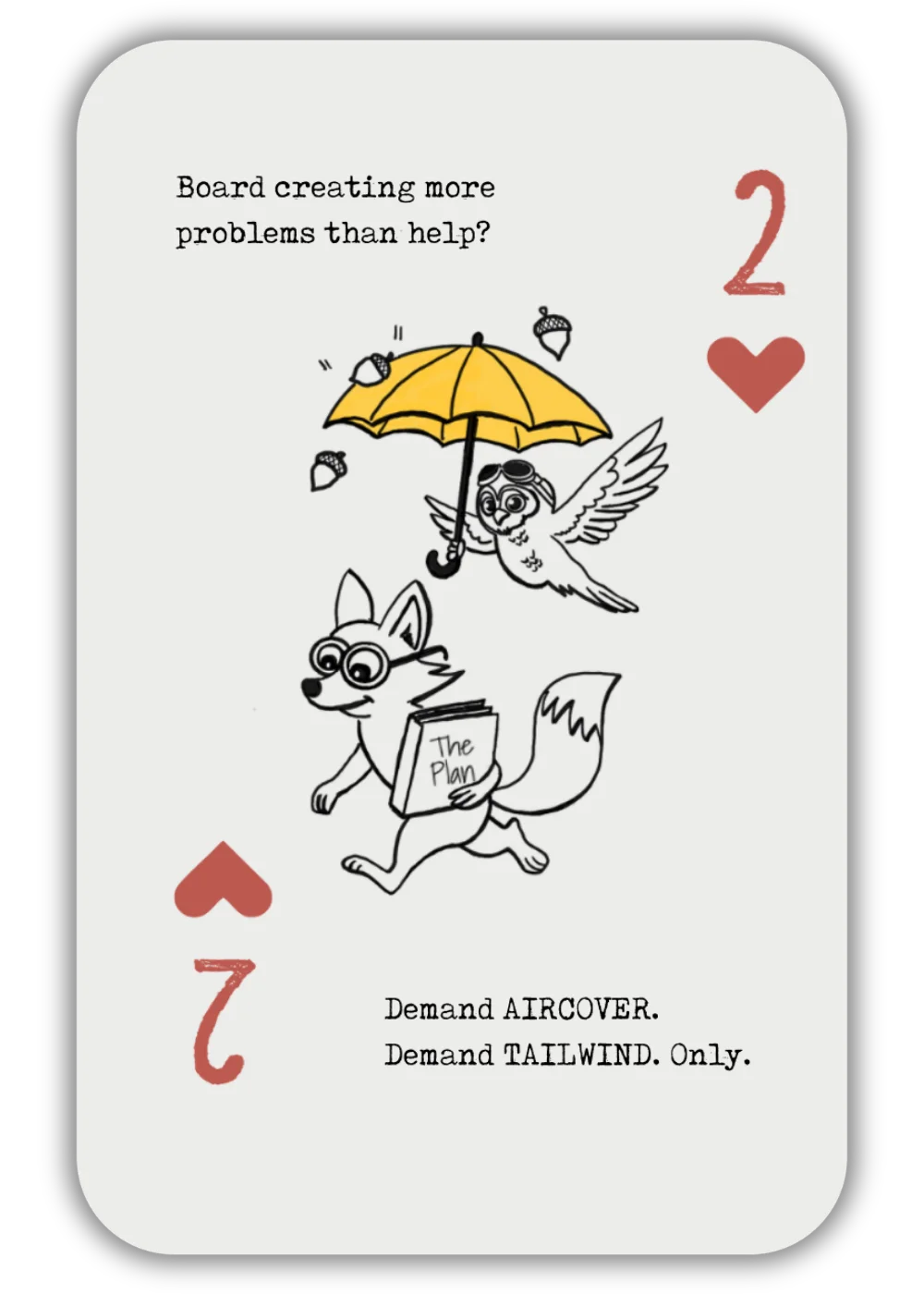
The responsibility of the board is to the company itself, and their role is to help the company grow. How do they do it? It really comes down to two concepts (credit goes to my friend Udi Daon):
Aircover
The board needs to shield the CEO from distractions, and allow them to focus in the absence of any micromanagement. They, and specifically the Chair, are the layer between the investors and the executive team. Their job is to keep an eye on affairs where the CEO and leadership team may have a blind spot or where they need to double down. Their duty is to ensure proper governance and eliminate risks to the company. Sometimes, a board member can take the heat for an unpopular decision and provide protected space for calculated risks to the CEO.
Tailwind
Provide extra energy where it is needed. It may be in the form of advice, connection, or actual activity. Extra support may mean activating their network in cases such as fundraising, key hires, M&A search, making key introductions and lobbying on behalf of the company. Additionally, they are key in providing guidance when asked and in general, removing obstacles in the company’s path.
Anything beyond that, anything that doesn’t fit neatly into those two categories, is usually counterproductive and actually slows the CEO and the company down. Sometimes such meddling leads all the way to destruction. Once a board becomes more focused on the operational day-to-day of the business – the death knells are ringing.
What can you do as a CEO to ensure you have the right kind of board?
Here are a few tips:
- Recruit your Chair well (if you are the Founder) – look for the right experience and values alignment. Really, this is no different than hiring for the leadership team. Ensure you have the right board composition (management, investors, independents). Careful on the first two options; go with the third (independents) whenever possible.
- Set up the right expectations – what do you expect from your board and what does the board expect from you? Be aligned from the get-go. Use function scorecards for the chair and board members as a part of their commitment to the company.
- Continue building trust through communication. Do what you say and say what you do – and expect the same from your board.
- Make changes to the board if all else fails. Or change the board altogether (by going to work for a different company).
What do YOU get from your board? Aircover and tailwind, or just an extra headache?