

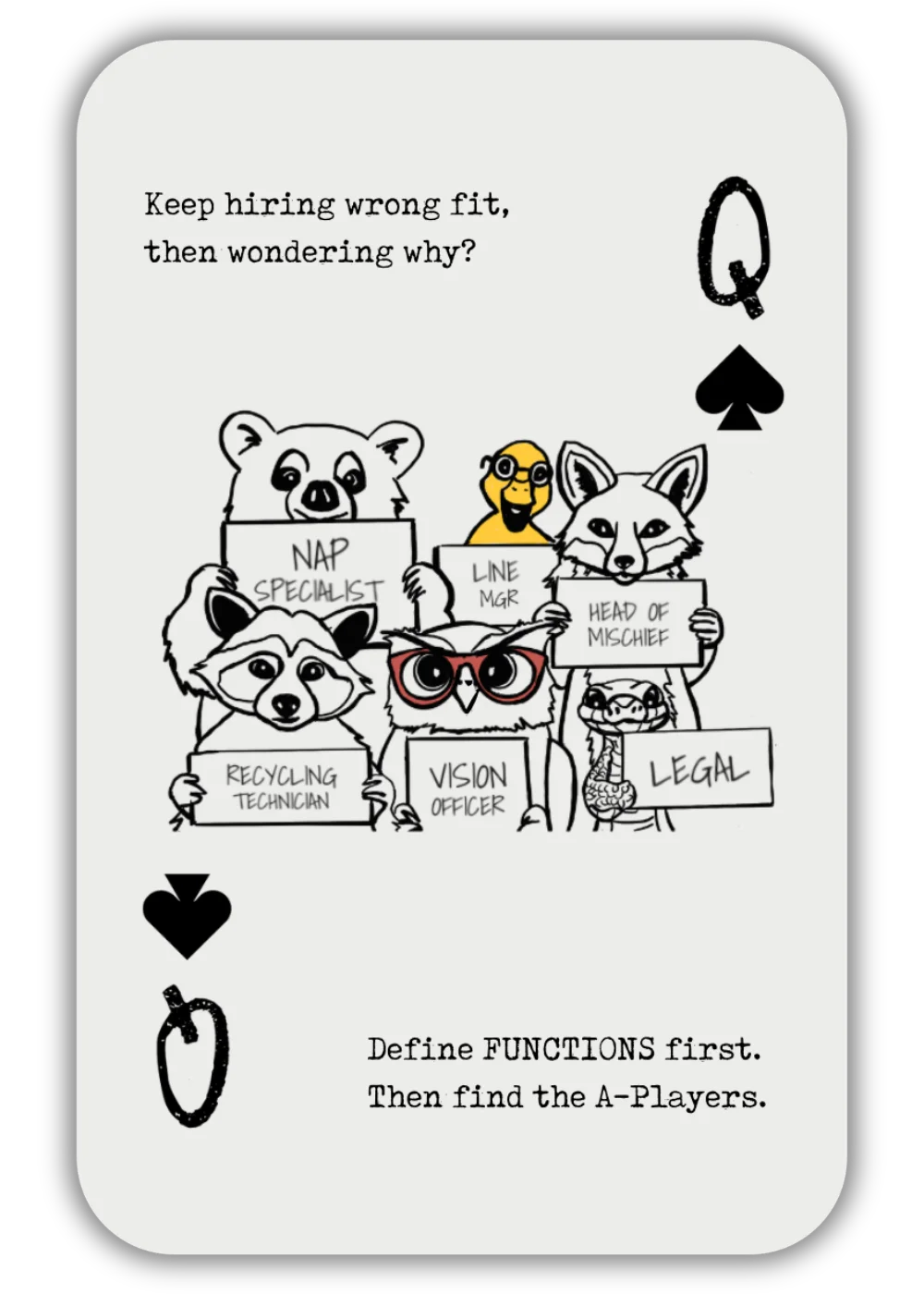
How do you define your needs and expectations, and then measure how they are being met?
Today I spoke to Tam-Lynn Coxworth, my go-to expert when it comes to everything the art of Executive Assistance. One of the topics was of me seeking help with management of my publication schedule. This was in response to me forgetting to post about the newest episode of CardCast; it seems like I need some assistance.
As we are talking, she says: “Why don’t you write down, you know, what you would expect from such a person, how would ‘good’ look like?”. I started laughing. “You mean a scorecard?” (Tam-Lynn is familiar with what I do and she knows Metronomics well, so we speak the same language). Truly, I couldn’t believe I showed up to the conversation WITHOUT a scorecard in hand – I would chastise a client of mine if they did that! Well, I suppose that’s why even coaches need coaches….
So, speaking of Scorecards, they are one of the cornerstones of the Human system in Metronomics. I’ve been accused of being a bit of a Scorecard Stickler, or perhaps even a Zealot…I wear that label proudly, as I have my reasons! Setting up the scorecards, and (eventually) getting them right is a massive leg up across the board when it comes to organizational design, hiring, supporting and developing A-players.
The concept of a Function Scorecard is rather simple. The first rule is, think of the FUNCTION, not the PERSON. It is very easy to start building a scorecard around someone in the role currently, but that is beside the point. When creating your organization design, you need to distance yourself from what you have, and focus on what you need. Don’t worry, the A-players you have today will likely fit right in anyway. The others, not so much – but that’s a good thing, too.
A proper Functional Scorecard has four distinct sections, each with a specific purpose:
The Mission
Why does this function exist? What is its mission? Simply put, what are you paying a person/team to deliver here?
The Accountabilities
List of the key “things” the function is accountable for. What do you expect them to take care of, so you don’t have to worry about it yourself?
The Competencies
Now, and only now, are we actually getting to the person in the role defined by our Scorecard. What do they need to know? What are the qualifications, experience, connections they need to have to succeed?
The Metrics
How do we measure the success of this function? Think of the metric first, not the goal. Method, rather than a number. Don’t overdo it here. Whenever possible, look for non-fiscal metrics.
And yes, you should have a Scorecard for every function in the organization, including the CEO/Owner. It may take a while to get there, so get started – with yourself, and with your leadership team. Here is a simple worksheet for download to get you started. Whether it is when hiring a new team member, updating the workings of the organization, or doing quarterly reviews – you will be glad you did.
Here is a simple xls template to get you started! It doesn’t need to be a rocket science.