

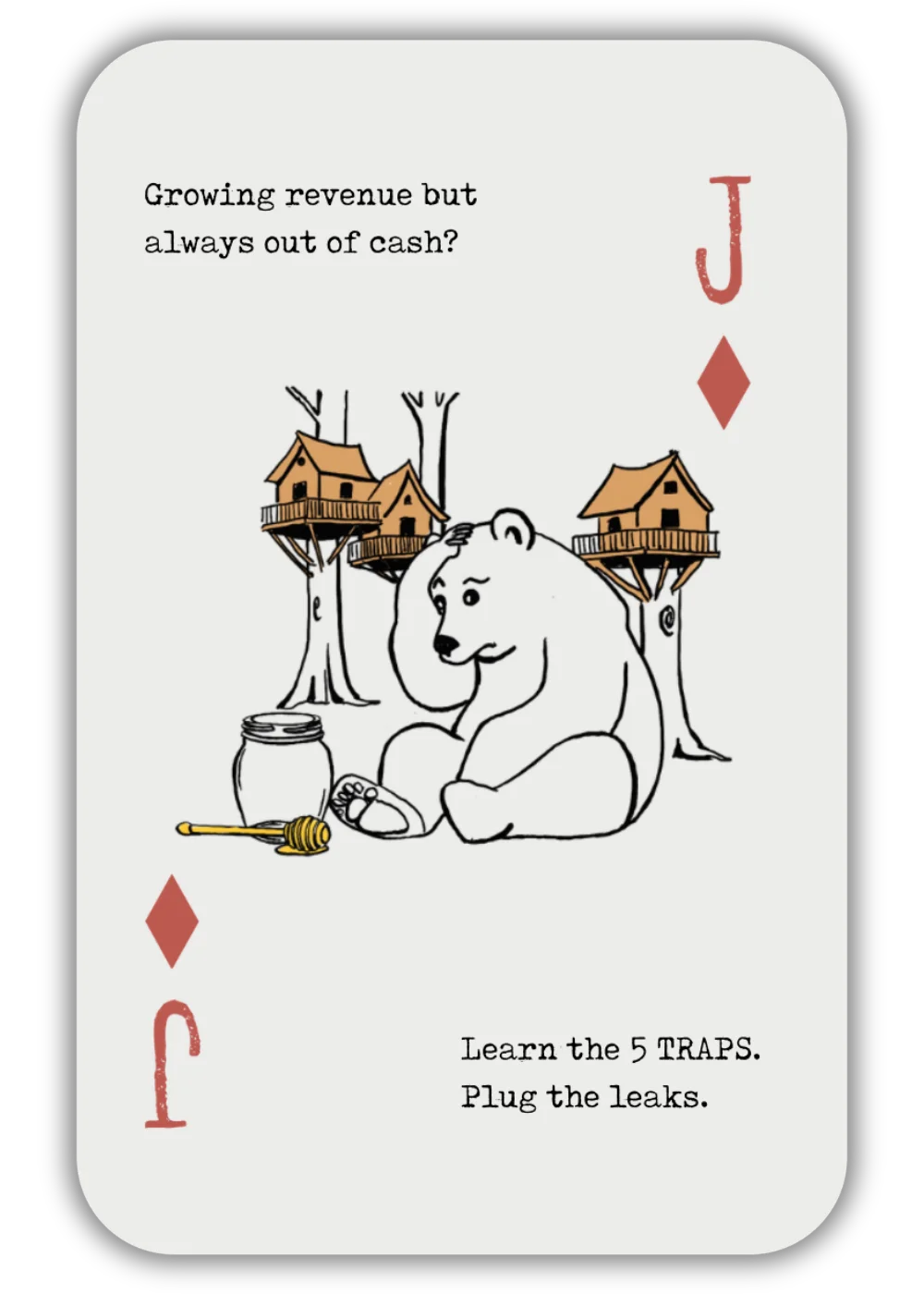
Are you growing revenue but somehow always running out of cash – wondering where all the money actually goes?
You are not alone. Unless you have a good CFO or an accountant that will really dive in with you, it’s rather easy to get sucked into running the business while taking your eyes away from the Profit & Loss report (P&L). Doing that though basically means driving while blind – and many CEOs, especially CEO-founders, do.
“I have been running this business for 30 years. We are growing, but I failed to build any wealth – in fact, I’m barely paying myself.” This is a quote from an actual CEO in distress, who got in touch via the contact form on my website. They are far from unique in their pain.
After looking over their financials, it was pretty clear what was going on. Which is the often overlooked point of accounting. There are a few possible red or orange flags one can glean quickly from looking at the P&L, that would explain why there is no cash lying around despite growing business. I’m not going to go into how to find those flags (check Greg Crabtree’s Simple Numbers, Straight Talk, Big Profits for that breakdown – highly recommended). I want to talk about the most common leadership blind spots which have the tendency to lead to this situation.
Wrong people
Labor, both direct and indirect, are often a major component of the cost. The team composition, cohesion, percentage of A-players, culture – all of those seemingly ethereal concepts in fact find their way into affecting your bottom line. As one example – founder CEOs often value loyalty and tenure over productivity and performance. For some reason, they tend to ignore the economical impact of holding on to the old ways and the C-players.
Mispaid founder(s)
Owners taking less or more than they deserve. Often, we see a confusion between the role of the owner (who ultimately reaps the benefits) and their functional role within the team. Pay yourself first and a reasonable (market) wage – if you don’t, consider it an investment that has to provide a decent return. Take your owner cut from profit after taxes, once the company can function and grow without the extra cash.
Undercapitalization
Growth can be expensive, and eat through cash. How much did it really cost to reach the last $1M in sales? Where was it financed from?
Overinvestment
Spending the money you don’t have on things you don’t need. This happens more often than one would expect. How does this purchase help the bottom line? I will never say ‘don’t ever splurge.’ However, you need to do so deliberately, and within your means.
Reactive Management
Without a plan, forecast, and a way to measure how far you are from it, you go into reactive mode – and then wonder again, where did all the money go?! Make sure your cash system (as we call it in Metronomics) is solid.
Is your business as profitable as you believe it can be?