

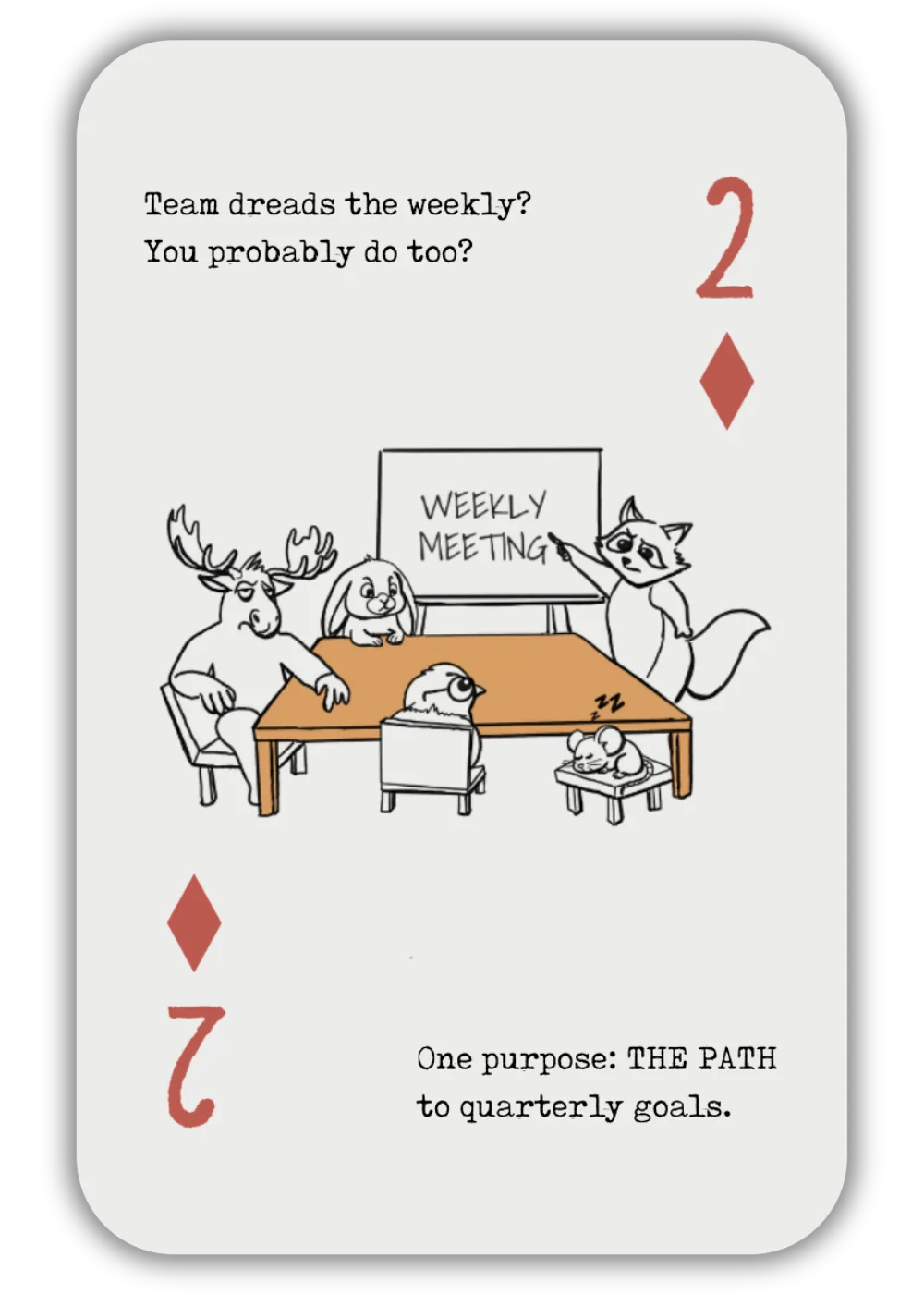
“Staff meeting,” “Management meeting,” “L10 meeting,” or just “Weekly” – besides just looking pretty in the calendar, why does nearly every framework talk about some version of this meeting? Yet, with so much advice, why is it so often generally hated by those forced to attend?
As is the case with any meeting, having one “because we should” or “because it is obvious,” without a real goal and understanding of the desired outcome, is a recipe for disaster. So, what is the purpose of a weekly meeting, who should be there and how do we make it successful? Here are a few tips:
Focus
The objective behind the weekly meeting is to remove barriers of progress towards quarterly goals. After all, there are only 13 weeks in a quarter! Missing a beat can be disastrous to achieving whatever it is we set off to do in the quarter. Keep all agenda items focused around this objective, and don’t let the meeting be hijacked.
Who
This is a team meeting. In a small company, it may be everyone, but generally we see the leadership and functional teams have their own. As always, the functional level meeting should happen before the leadership one, to facilitate information flow upwards and provide a path for escalation when needed. We often see those meetings overstaffed at first, with people who have no chance to meaningfully contribute being there week after week. Usually they are included for some historical reasons.
Length
30-60 minutes usually suffices. If you find yourself needing more, go back to “focus.” Your weekly meeting may be picking up some agenda items that belong elsewhere. Often we see this problem in absence of a Daily Huddle – there is just too much tactical update accumulated during the week without the Huddle serving as the release valve.
Metrics first
You get what you measure – and having the key metrics in front of everyone at the meeting provides the necessary clarity. Are we slipping here from our forecasted path to the quarterly target? What can we do to catch up? Who can help?
Priorities second
Each quarterly priority needs to be broken down into weekly chunks. What are the deliverables or outcomes this week? This way, we know instantly if there is a problem, and we remove any element of surprise as the quarter draws to a close.
Discussions
Does anyone have a topic that requires the attention of everyone in the room, and has an impact on the quarterly progress? Now is the time! Declare the topics in advance to give the team a chance to prepare for the discussion. Don’t forget to clarify what you seek – is it to inform, seek advice, ask for help, or perhaps an approval?
And of course, never omit the Good News! Follow this set agenda – Good News, Metrics, Priorities, Discussion – lead with great prep, keep it tight and you will get the most out of every week.
How does your weekly meeting look today, and how productive does everyone deem it to be?